In What Ways AI Can Assist With Creating Marketing Content in Rochester, NY
Artificial intelligence is reshaping how businesses map out, write, and improve marketing content. For companies in Rochester, NY, that shift matters because local search is competitive, service-area visibility is essential, and content has to do more than add volume. It needs to enhance SEO services, strengthen brand voice, and help teams create better work with less friction.
If applied strategically, AI can handle repetitive parts of content marketing while still leaving room for strategy, fresh ideas, and human editing. That makes it valuable for agencies, in-house teams, and local businesses that need more website copy, blog content, social media marketing, and email marketing without sacrificing quality. The best results come from combining artificial intelligence with a clear content strategy and experienced ai experts who understand both marketing and the limits of the tools.
What is AI content development for promotional efforts?
AI content production for marketing is the use of artificial intelligence to assist with brainstorming, drafting, revising, tailoring, and optimization across various kinds of marketing content. It often relies on generative AI, machine learning, natural language processing, and large language models to produce text that can be adapted for blogs, landing pages, ads, and more.
In practice, AI supports the content workflow rather than replacing it. A marketer might use it to produce headline ideas, write first drafts, summarize research, or expand rough notes into usable copywriting. From there, the team reviews the material, checks facts, aligns tone, and improves relevance for the audience.
This approach helps teams move faster while keeping quality under control. Instead of spending hours on a blank page, writers can focus on drafting, optimization, and refinement. For Rochester businesses, that efficiency can be especially valuable when marketing teams need to keep up with local events, seasonal promotions, service updates, and ongoing SEO services.
AI is most effective when it supports a broader content marketing system. That means clear goals, defined audience segments, strong prompts, and a repeatable workflow that connects content to performance metrics. When that structure is in place, AI can improve scalability without weakening consistency.
How does AI help with web design content?
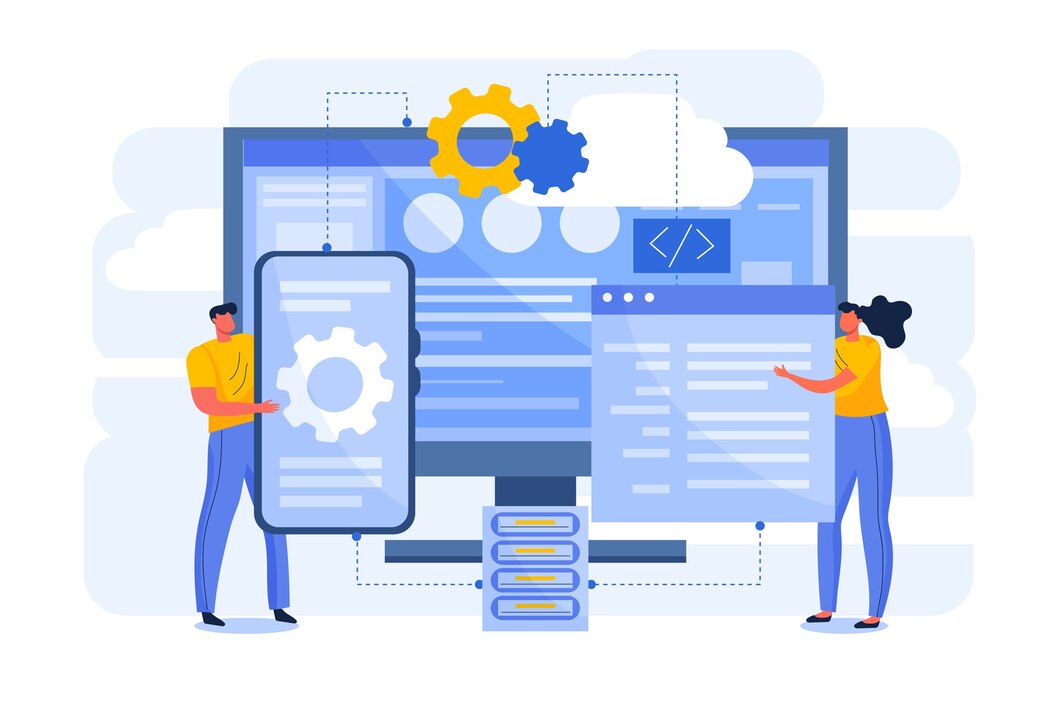
Web design is more than just visuals. It also relies on the words that lead visitors through a site. AI can assist in creating website copy for homepages, service pages, calls to action, FAQs, and supporting content that boosts clarity and conversion rate optimization.
For example, a Rochester, NY home services company may need a homepage that quickly explains service areas, value propositions, and next steps. AI can draft several versions of that website copy so the team can compare tone, structure, and readability. That gives designers and marketers more flexibility during the web design process.
AI can also help with message testing. By generating multiple headline options or CTA variations, teams can evaluate which version may boost engagement or support conversion rate optimization. This is useful for landing pages, service pages, and lead-generation forms where small copy changes can influence performance.
When paired with strong human editing, AI becomes a creative support tool rather than a replacement for strategy. It can suggest concise messaging, simplify complex service descriptions, and help maintain consistency across pages. For agencies and in-house teams, that means faster web design content production without losing the intent behind the design.
In competitive local markets like Rochester, NY, this matters because website copy must speak to both search engines and real people. It should reflect local trust signals, explain services clearly, and support local search visibility through location-aware messaging.
How do AI-powered tools support SEO services?
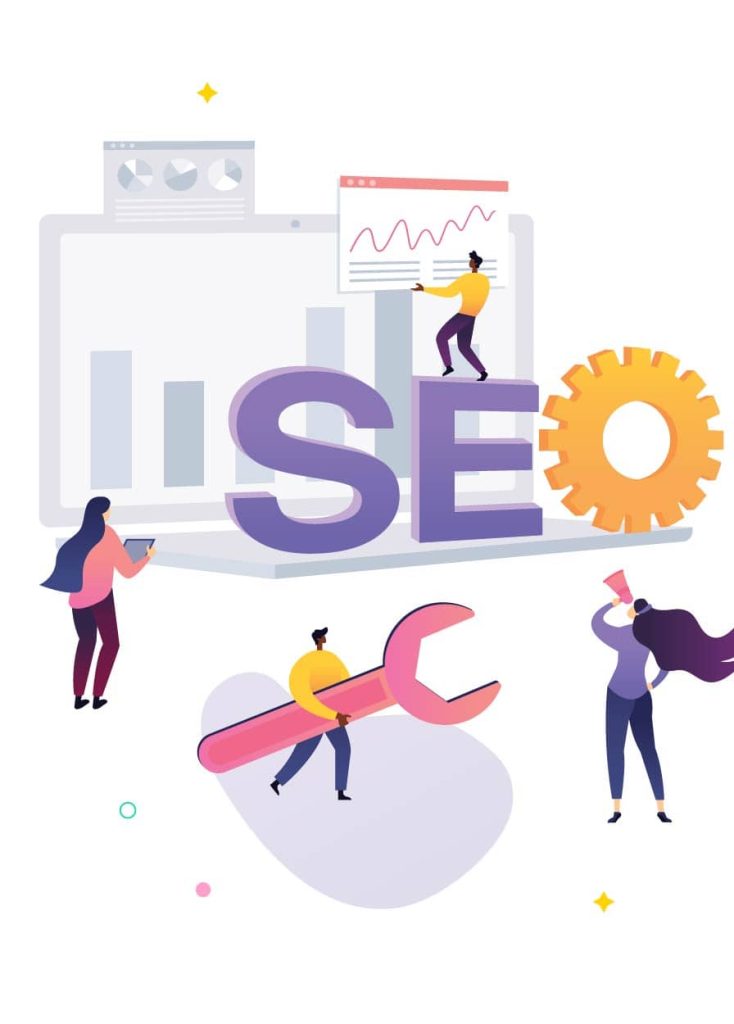
Artificial intelligence tools can make SEO services more efficient by supporting keyword research, search intent analysis, topic clustering, and content optimization. Instead of having to manually sorting through every query idea, marketers can use AI to spot themes, compare phrasing, and rank pages based on audience behavior.
Keyword research is one of the key applications. AI can surface related phrases, answer-based queries, and long-tail opportunities that align with search intent. For a Rochester business, that might include location-specific terms, service questions, or neighborhood modifiers that reflect how people search for local help.
Understanding search intent is critical. Some users want information, while others are ready to contact a provider. AI can help classify content ideas based on whether the goal is awareness, consideration, or conversion. That makes it easier to build SEO services around the right page type, whether that is a blog post, a service page, or a comparison page.
AI can also support ranking efforts by making optimization quicker. It can recommend title tag variations, meta description drafts, internal linking ideas, and related terms to include naturally in the copy. Still, the final result depends on a strategist who understands content quality, local search, and how Google evaluates usefulness.
For businesses serving Rochester, Brighton, Irondequoit, Greece, and Henrietta, AI can help identify regional opportunities that support local search visibility. That may include neighborhood pages, service-area content, or articles tailored to local customer concerns. When combined with Google Business Profile optimization, these efforts can strengthen a brand’s presence in nearby search results.
How can AI improve digital marketing campaigns?
AI can enhance marketing campaigns by supporting teams create better ad copy, evaluate messaging faster, and measure campaign performance more efficiently. It is especially valuable when marketers need to create multiple versions of content for different channels and audiences.
In paid advertising, AI can draft ad copy variations based on audience pain points, offers, and calls to action. That saves time during brainstorming and helps teams quickly compare messages that may lead to higher click-through and conversion outcomes. For digital marketing teams, this can mean more agile campaigns and better use of analytics.
AI also supports personalization. A campaign for higher education audiences may need a different tone than one for healthcare or manufacturing prospects. AI can adjust messaging based on segment, stage of the funnel, and channel format. That improves audience engagement while preserving consistency across platforms.
Another advantage is scalability. Local businesses often need multiple campaign assets at once: social media marketing posts, landing page copy, email marketing sequences, and remarketing messages. AI can create initial drafts quickly so the team can concentrate on strategy, offer alignment, and performance testing.
For Rochester, NY companies, this can be especially useful during seasonal promotions, hiring campaigns, community events, or service launches. AI makes it easier to move from idea to execution without slowing down the broader marketing schedule.
Where do AI experts fit into the process?
ai experts play an important function because AI is only as strong as the process behind it. Systems can create text, but they do not automatically understand organizational aims, brand nuance, or compliance needs. This is where prompt engineering, workflow design, and human oversight matter.
Prompt engineering helps direct the model toward better outputs. A broad prompt may produce generic content, while a well-built prompt can improve tone, structure, specificity, and relevance. ai experts know how to write prompts that account for readers, format, and SEO services requirements.
They also help teams develop repeatable systems. That includes defining review steps, setting content standards, and deciding which tasks should be automated versus handled manually. The goal is not to let AI run unchecked. The goal is to establish a reliable workflow that supports speed and quality together.
Human oversight remains vital for accuracy, originality, and brand protection. Even the best large language models can miss context or produce phrasing that does not fit the company’s positioning. ai experts help teams decide when content needs a deeper rewrite, additional fact-checking, or more careful editing.
For Rochester agencies and businesses, this expertise can make AI adoption far more practical. It turns AI from a novelty into a usable part of content strategy and content marketing operations.
What content can AI help create?
AI can support many content formats, especially when the team needs a rapid first version or a range of variations. Typical uses include blog posts, social media content, and email marketing.
For blog posts, AI can help structure topics, condense research, propose headings, and draft introductions or additional sections. This supports businesses that want steady publishing without giving up efficiency. It also helps writers keep momentum going during the drafting phase.
With social media content, AI can quickly generate post captions, content angles, hooks, and repurposed messages from larger assets. That makes it easier to keep posting with consistency across platforms while adapting tone for different audiences. It can also help teams create more timely content for events, promotions, or local announcements.
When writing emails, AI can draft subject lines, preview text, nurture sequences, and promotional messages. It can even help personalize messages based on audience segment or past behavior. That can improve relevance and support stronger audience engagement when paired with accurate data and thoughtful review.
AI can also help with conversion pages, product descriptions, FAQs, internal knowledge articles, and lead magnets. The key is aligning the content type with the right amount of human editing and strategy.
How can Rochester, NY businesses apply AI without losing brand voice?
Rochester, NY businesses often work in industries where trust, local knowledge, and service quality count. As a result, AI content needs to strengthen local branding without sounding generic. The best way to preserve brand voice is to define it clearly before using AI https://auburn-ny-ge053.publishlane.com/posts/how-social-media-marketing-boosts-digital-expansion-in-rochester-ny at scale.
Begin by documenting tone, terminology, audience priorities, and examples of approved messaging. A healthcare provider in Rochester may need a calm, reassuring style, while a manufacturing company may prefer a more technical and efficient voice. AI can mirror those differences if the prompt and source material are specific enough.
Local branding also depends on context. Content should mention Rochester, NY naturally when relevant and include nearby communities like Brighton, Irondequoit, Greece, and Henrietta where service areas matter. That helps build local relevance and supports local search visibility.
This is especially important for businesses relying on Google Business Profile optimization and service-area pages. AI can help create those pages faster, but the content still needs to feel specific to the region and the brand. Human editing is what keeps the voice authentic and aligned with customer expectations.
In a competitive market like Rochester, NY, the most effective AI content is not the most automated content. It is the content that balances speed, local relevance, and brand consistency.
What are the main the limits of AI in content creation?
AI has major strengths, but it also has clear limits. One of the biggest is fact-checking. AI can generate convincing text that is incomplete, outdated, or simply wrong. Every important claim should be reviewed before publication, especially for regulated industries or technical topics.
Originality is another concern. AI often learns from patterns in existing data, which means it can produce content that feels repetitive or formulaic. That is why teams should use AI as a starting point, not a finished product. Original insight, local knowledge, and expert perspective still matter.
Compliance is also critical. Companies in healthcare, legal, finance, education, and other sensitive sectors need to ensure that content meets industry and legal standards. AI may not understand those requirements on its own, so human review is essential.
There are brand risks. If the tool is not directed carefully, it can miss tone, overstate benefits, or create content that feels disconnected from the company’s identity. Good editing helps avoid these issues and protects content quality.
How should businesses combine AI and human creativity?
The best results come from combining AI efficiency with human creativity. AI can help with drafting, brainstorming, and optimization, while people bring judgment, emotion, originality, and strategic thinking.
A practical process might look like this: the team defines the content goal, uses AI to produce an outline or first draft, reviews the draft for accuracy and relevance, and then applies human editing to refine tone, structure, and style. This keeps the workflow moving while preserving content quality.
Sunstone Digital Tech50 Fountain Plz #1400, Buffalo, NY 14202
(315) 758-3349
https://maps.app.goo.gl/y9HMhvcoPCh9V3eKA
https://sunstonedigitaltech.com/buffalo-marketing-agency/web-design
42.8898193, -78.8738661
Creative strategy should still lead the process. AI can suggest options, but people decide what fits the audience, the campaign, and the business objective. That is especially important for content marketing where every piece should connect back to measurable outcomes.
Human editing also improves nuance. It can add local references, sharpen the offer, tighten the copywriting, and make sure the final message sounds like the brand itself. For Rochester businesses, that local detail can be the difference between content that gets skimmed and content that earns trust.
When AI and people work together well, the result is better scalability without a drop in content quality. Teams can produce more while staying focused on relevance, consistency, and performance.
What should Rochester marketers ask before adopting AI?
Before adopting AI, Rochester marketers should ask a few practical questions about workflow integration, ROI, and data privacy. These questions help determine whether AI will genuinely improve the content process or just add another tool to manage.
First, how will AI fit into the existing workflow? Teams should know who will prompt the model, which person will review the output, and how the content moves from drafting to publishing. If the process is undefined, AI may lead to more uncertainty than productivity.
Next, what is the expected ROI? Marketers should define whether success means shorter turnaround, more website traffic, better rankings, higher conversion rate optimization, or better campaign performance. Clear goals make it easier to measure whether AI is helping.
Third, how will data privacy be handled? Businesses should be careful about uploading private details or customer data into external tools. This is especially critical for organizations in healthcare, education, and other fields where privacy standards are strict.
Finally, who will maintain quality control? AI outputs still need fact-checking, originality checks, and compliance review. The right workflow should include human editing and defined responsibility.
For Rochester, NY businesses, AI adoption works best when it supports local marketing goals such as neighborhood visibility, regional service pages, and stronger Google Business Profile optimization. That keeps the technology grounded in practical business results.
FAQ
Can AI replace a marketing content writer?
No. AI can assist with drafting, brainstorming, and optimization, but it does not replace strategy, judgment, originality, or human editing. A skilled writer still shapes the message, protects brand voice, and ensures content quality.
How does AI help with SEO content for local businesses?
AI helps with keyword research, search intent analysis, topic ideas, and on-page optimization. For local businesses in Rochester, NY, it can also support location-specific content that improves local search visibility and service-area relevance.
What types of marketing content can AI create fastest?
AI is especially fast at creating blog content outlines, social media content, email marketing drafts, headline ideas, and ad copy variations. These formats benefit from rapid drafting and easy iteration.
How can you keep AI-generated content on-brand?
Define your brand voice clearly, use strong prompt engineering, provide examples, and review every draft with human editing. It helps maintain tone, consistency, and relevance across all content.
Is AI content AI content safe and effective for Rochester, NY businesses?
Yes, when used carefully. Rochester, NY businesses can use AI effectively if they implement fact-checking, protect data privacy, maintain compliance, and adjust content to local branding and audience needs.